
Abraham and Shem
The Relationship Between Two Spiritual Giants

We learn that Avraham was fearful, and God came to him in a vision of protection “Some time later, the word of יהוה came to Abram in a vision: “Fear not, Abram, I am a shield to you; Your reward shall be very great.” (Genesis 15:1) According to Rabbi Berekhya based on an interpretation of Isaiah 41:5-6 “He feared Shem. Abraham and Shem were conspicuous in the world. “And feared” – each one feared the other. This one [Abraham] feared the other, saying: Perhaps Shem has resentment in his heart against me because I killed his descendants. And that one [Shem] feared the other, saying: Perhaps Abraham has resentment in his heart against me because I produced wicked offspring.”1 While the text states Abraham feared Shem for his deed against his offspring, we will see that the relationship between the two might stem from a deeper understanding of a mutual role as servants in God’s plan.
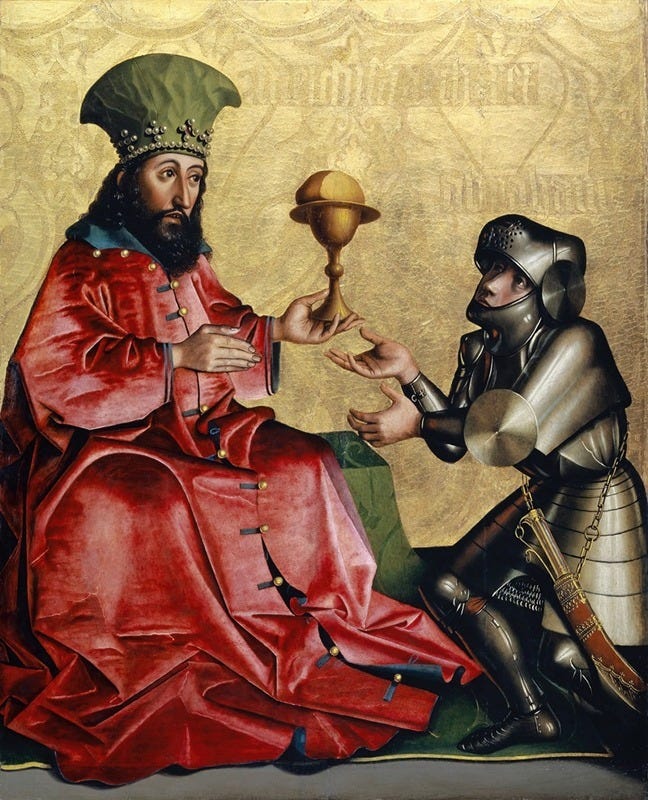
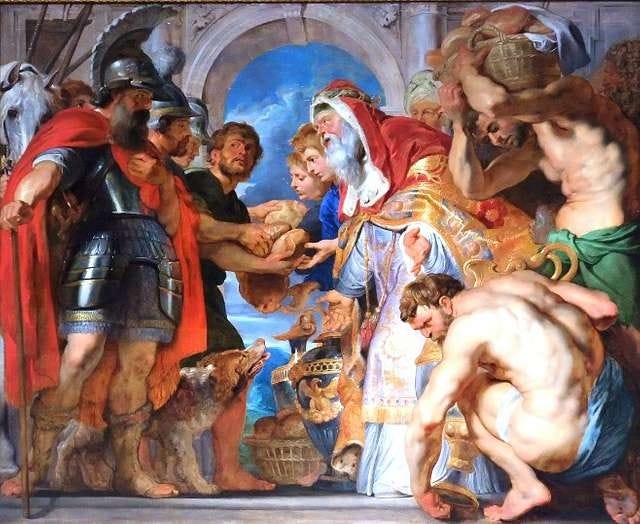
This is what the Torah says, without commentary, in Genesis 14:18-20 after Avraham returns from his victory over the coalition of kings “And King Melchizedek of Salem brought out bread and wine; he was a priest of God Most High. He blessed him, saying, “Blessed be Abram of God Most High, Creator of heaven and earth. And blessed be God Most High, Who has delivered your foes into your hand.” And [Abram] gave him a tenth of everything.” Why would Avraham give him a tenth if there was not some sort of fearful relationship between the two, and, why would Avraham fear Melchizedek?
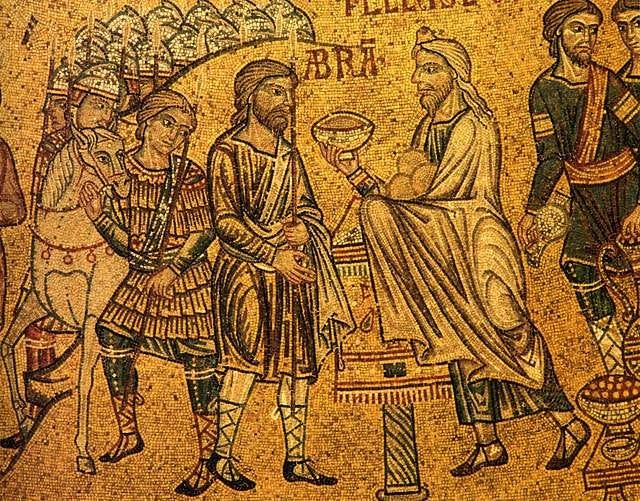
Furthermore, what is this tradition associating Melchizedek and Shem as the same figure? Rabbi Berekhya comments regarding Shem and Abraham’s relationship in Genesis 15 immediately follows the story of the meeting between Abraham and Melchizedek in Genesis 14, implying a connection between the two events. The earliest source seemingly passing this tradition down is the Targum Yonasan (Jonathan), where it directly interpolates Genesis 14:18 as “And Malka Zadika, who was Shem bar Noah, the king of Yerushalem, came forth to meet Abram, and brought forth to him bread and wine; and in that time he ministered before Eloha Ilaha.”2 Very clearly, the relationship between Abraham and Shem/Mechizedek is one of mutual respect, but also mutual fear over the other's knowledge and divine favor. Similar to a mutually assured nuclear destruction, a ‘war’ between these two great leaders could have collapsed civilization, much like the near catastrophic War of the Nine Kings at the Valley of Siddim, where Sodom and Gomorrah were punished with complete destruction.
Referring back to Rabbi Berekhya’s interpretation of Isaiah from Bereshit Rabbah; “The ends of the earth” – this one was situated at one end of the earth, and that one was situated at the other end of the earth. “They approached and came” (Isaiah 41:5) – each one approached the other. “Each man would help the other” (Isaiah 41:6) – this one [Shem] helped the other one with blessings, and that one [Abraham] helped the other one with gifts. This one helped the other one with blessings – “He blessed him, and he said: Blessed is Abram to God, the Most High…” (Genesis 14:19). And that one helped the other one with gifts: “He gave him a tithe from everything” (Genesis 14:20). Seemingly the relationship between these two men was one of kindness and giving, exemplified by Abraham’s Chesed (kindness/charity) toward Melchizedek. In exchange, much like any High Priest, Melchizedek blessed Abraham.
This time from Pirkei deRabbi Eliezer, we learn some more information regarding the specific gifts Abraham gave to Melchizedek “Rabbi Joshua said: Abraham was the first to begin to give a tithe. He took all the tithe of the kings and all the tithe of the wealth of Lot, the son of his brother, and gave (it) to Shem, the son of Noah, as it is said, "And he gave him a tenth of all" (Gen. 14:20).3 These “gifts” were not merely normal gifts, but rather they were the very first tithes to the Temple, which we learned from earlier was most likely the location for the tents of Shem. Following the standard laws, Abraham gives 1/10th of his, and his family's wealth to Shem, in what appears as a proto offering. The question would be exactly the form these tithes took, whether Abraham who was known for his great wealth as a shepherd was also sacrificing animals at this location. Another question arises on the nature of why Abraham had to give these to Melchizedek as a “gift”, almost some form of tax extortion to avoid conflict between the two men. Furthermore, why would Abraham ‘need’ Melchizedek at all, given that his entire fear and trust was in Hashem? All Melchizedek offers Abraham is a blessing, one that would be entirely redundant to a loyal servant of the Lord.
Lacking an explicit answer, Pirkei deRabbi Eliezer provides some context from the perspective of Abraham “Shem, the son of Noah, came forth to meet him, and when he saw all the deeds which he had done and all the wealth which he had brought back, he wondered in his heart. He began to praise, to glorify, and to laud the name of the Most High, saying: "And blessed be God the Most High, who hath delivered thine enemies into thy hand" (ibid.). Abraham arose and prayed before the Holy One, blessed be He, saying: Sovereign of all worlds ! Not by the power of my hand, nor by the power of my right hand have I done all these things, but by the power of Thy right hand with which Thou dost shield me in this world and in the world to come, as it is said, "But thou, O Lord, art a shield about me" (Ps. 3:3) in this world; "my glory, and the lifter up of mine head" (ibid.) in the world to come. The angels answered and said: Blessed art Thou, O Lord, the shield of Abraham.”4 It appears that Abraham truly had great respect for Shem, despite the ‘fear’ that he struck in him, and respected his status as a devoted man of God. By subsuming his own pride, and showing respect to Melchizedek, Abraham set the stage for what would be the foundation for the location of the future building of the Holy Temple. It was for this sublimation of his ego, characterized by Abraham’s persistent Chesed (kindness), that God blesses Abraham’s generations for their capacity to create true peace.
Returning to Isaiah 41:7 where it says “The carpenter encouraged [the smith]”, we learn from Bereshit Rabbah 44:7 again that the carpenter is Shem, who built the ark with his father Noah. The ‘smith’ refers to Avraham, who was refined in the fiery furnace of Nimrod, where we again continue in Isaiah 41:7 “And one who smooths with a hammer, one who strikes on the anvil [paam] He strengthened it with nails” – commented on by Bereshit Rabbah – “as he [Abraham] would direct his hammer and strike all the people of the world onto a single path to the Omnipresent. “Saying of the glue: It is good” – these are the nations of the world, who say: ‘It is preferable to adhere to the God of Abram, and we will not adhere to Nimrod’s idolatry.’ “He strengthened it with nails” – Abraham strengthened Shem in mitzvot and good deeds. And, [as a result] “It shall not topple” – referring to Abraham.”5
Next in Isaiah line 8 it takes us from Shem and Abraham, into his offspring, Jacob “But you, Israel, My servant, Jacob, whom I have chosen, Seed of Abraham My friend.....Fear not, for I am with you”.6 God once again shows the faithful, the children of Israel, they need not fear anything other than Him. Through their, our, ancestor Abraham’s giving and kindness, we merit the legacy of Torah and the Mitzvot that underpins the Torah’s system of action.
Beyond this relationship of tithing and priesthood, Shem also served another critical role for Abraham. From the Midrash we again learn “Rabban Gamaliel said: Abraham sent and called for Shem, the son of Noah, and he circumcised the flesh of the foreskin of our father Abraham, and the flesh of the foreskin of Ishmael his son, as it is said, "In the selfsame day was Abraham circumcised, and Ishmael his son" (Gen. 17:26)7 Now, there may be some contradiction of this and the standard view that Abraham essentially self circumcised, but this direct information from Rabban Gamaliel would seemingly better explain how an elder man like Abraham was able to perform these rituals. Regardless, this may make Shem one of the first Mohels in history.
Bereshit Rabbah 44:7
Targum Jonathan Genesis 14:18
Pirkei DeRabbi Eliezer 27:6
Pirkei DeRabbi Eliezer 27:7
Bereshit Rabbah 44:7
Isaiah 41:8
Pirkei DeRabbi Eliezer 29:2